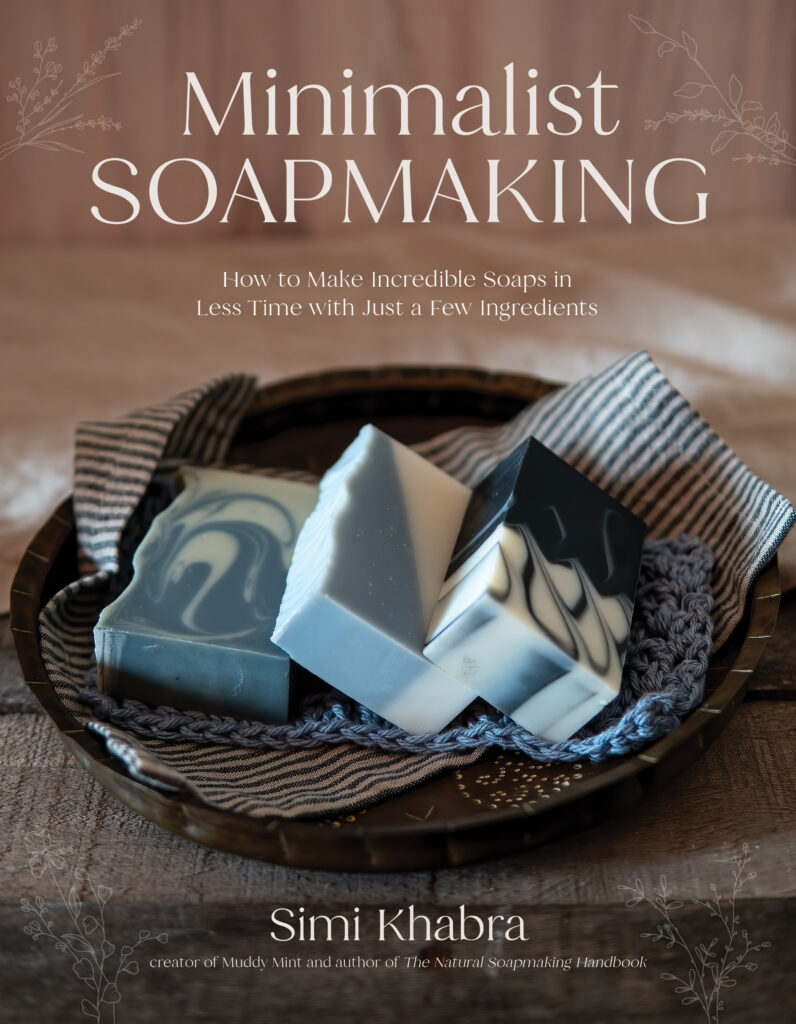
Whether you’re pouring your very first batch of cold process soap or looking to simplify your formulations, Minimalist Soapmaking offers a refreshing approach to handcrafted soap. We sat down with author Simi of Muddy Mint to talk about her journey from beginner soap maker to creating more than 50,000 bars of soap, what inspired her new book, and her best advice for makers of every skill level.
Tell us a little about yourself and your business. What inspired you to become a soap maker?
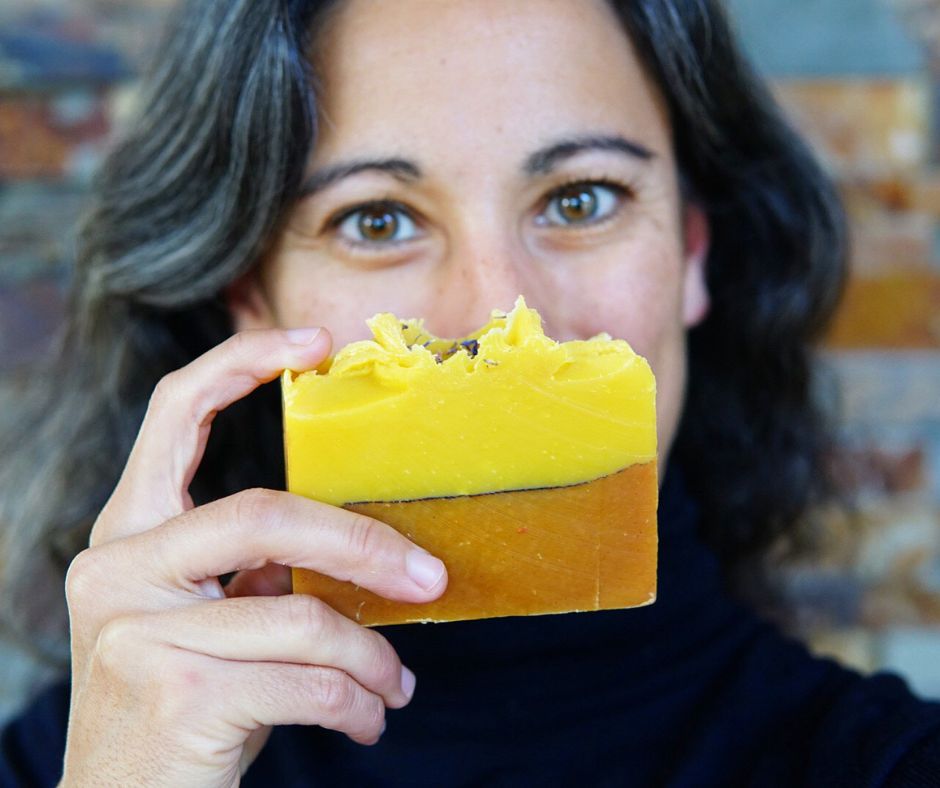
Hi! My name is Simi and I’m the owner of Muddy Mint. I live in Longmont, Colorado, although I’m originally from Ottawa, Canada! Muddy Mint began in August of 2016 (ten years ago!) because I became obsessed with soapmaking and decided to sell my overflow soap. I already had a handmade jewelry shop on Etsy at the time, so starting a soap shop felt like a natural choice. I was inspired to make soap by buying handmade soap on Etsy. I just loved the soaps I received, and they helped my dry skin so much that I vowed to learn to make my own soap before the soap I had purchased was gone. Little did I know what I was getting myself into!
Do you remember the very first bar of soap you ever made? What was that experience like?
Yes! I remember that loaf exactly! It was in March of 2016, and I made a loaf from a kit I had purchased online. The kit included all the oils, lye, and fragrance needed to make my soap. It was a white soap with some kind of cranberry fragrance oil. Because I had researched a ton beforehand by watching videos and learning everything I could, my first loaf of soap turned out perfectly. I was hooked from the start. After that, I graduated to making more and more complex designs.
What Have You Learned After Making More Than 50,000 Bars of Soap?
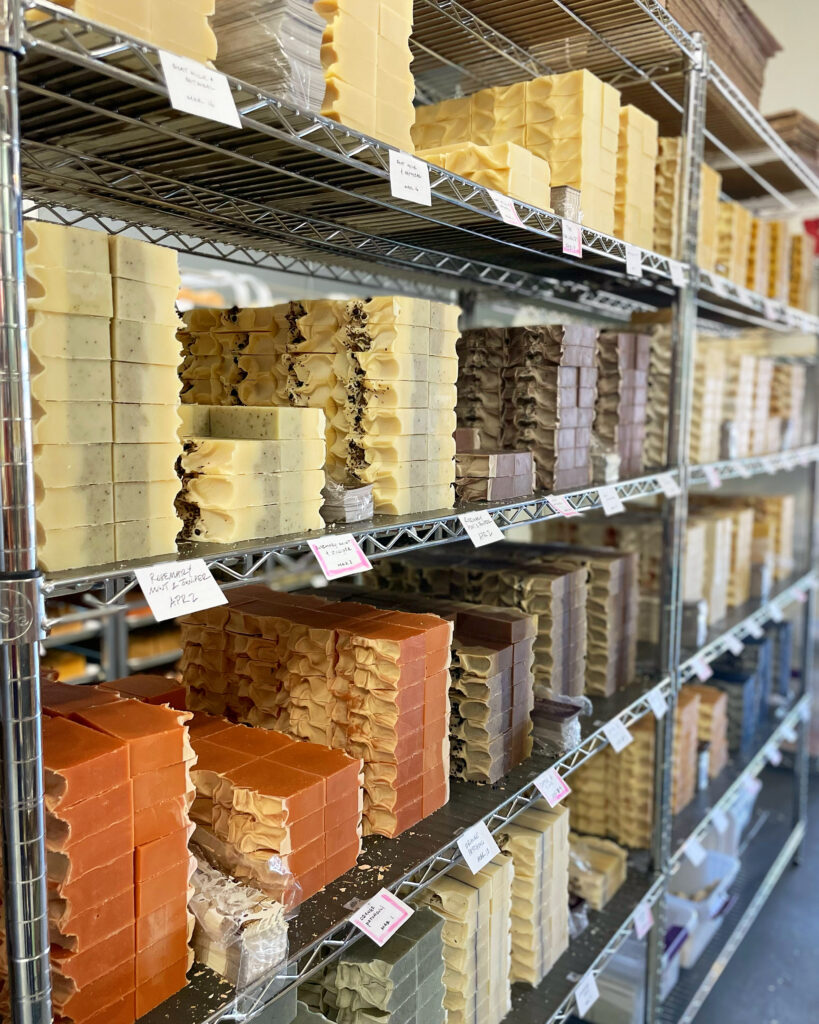
It’s crazy to think about! We were actually making and selling 50,000 bars of soap per year back in 2023, so who knows how many total bars of soap I’ve made. The key lesson, I think, is that soapmaking is 90% prep work. If you do all your prep, make sure you have all the ingredients you need close at hand, breathe deeply and remind yourself of what you’re doing before the lye hits the oils, you’ll be good. Nearly every time I messed up was because I went too fast and didn’t take the time to prepare in advance.
We are so excited for your book and to have the honor of carrying it at Bulk Apothecary! What inspired you to write Minimalist Soapmaking?
Thank you! And thanks for carrying my first book, The Natural Soapmaking Handbook, too! I love when soapmakers and suppliers come together. I had a second book in my head right after finishing my first book, but I wasn’t ready to dive in right away. Writing a book is like having a baby – you forget how hard it was! When my publisher, Page Street Publishing, contacted me to write a second book, I knew I wanted to do it and I had an idea. But my idea ended up morphing quite a bit and organically became Minimalist Soapmaking. It all started with a sample piece of writing I sent to Page Street. Before writing the book, Page Street requested a sample table of contents, a sample recipe, and a sample piece of writing to help flush out the idea. Later, when I was re-reading my writing sample, I realized that minimalism was an underlying theme in everything I had written. This led to an aha moment and I thought it would be interesting to write a book with this thread throughout. Plus, this concept matches my current stage of life and business perfectly! We re-visited the table of contents with this new direction, and it all came together from there.
What makes this book different from other soapmaking books on the market?
I think this book, and my first book, are very different from most (if not all) soapmaking books because the recipes all use a pre-mixed lye-water solution that is half water and half lye. This is a technique I’ve been using since very early on in my soapmaking journey and I find it infinitely easier! Minimalist Soapmaking also focuses on batching oils to simplify your soapmaking days. The book focuses heavily on understanding the ‘why’ behind different soapmaking steps, a part I feel many books skip. In addition, the soapmaking process is highlighted more than most books, as I think it’s a key piece for avoiding mistakes. Finally, the recipes all use a very minimal set of ingredients to create many different soaps. In fact, the book has 27 recipes, and each one has a variation, so you get a lot of ideas for making your own soaps. I hope that it feels like inspiration to many new and seasoned soapmakers! As an added bonus, I conducted many natural color experiments for this book using botanicals infused in oil and I highlight all my results at the end. And, of course, the book uses all-natural and palm-free ingredients, and every recipe can be made vegan, if you like!
What does “minimalist soapmaking” mean to you?
Mostly it means easy soapmaking days. When you start the day, your oils and lye are ready, and it doesn’t take long to make the soap. It also means fewer ingredients, so you know where everything is, preventing overwhelm. Having fewer items actually leads to more creativity, especially if the ingredients you do have inspire that creativity. Finally, it means simple and beautiful design. Soapmaking doesn’t have to be complicated (unless you want it to be!).
One thing we love about your book is the focus on fewer, intentional ingredients. Why was that important to you?
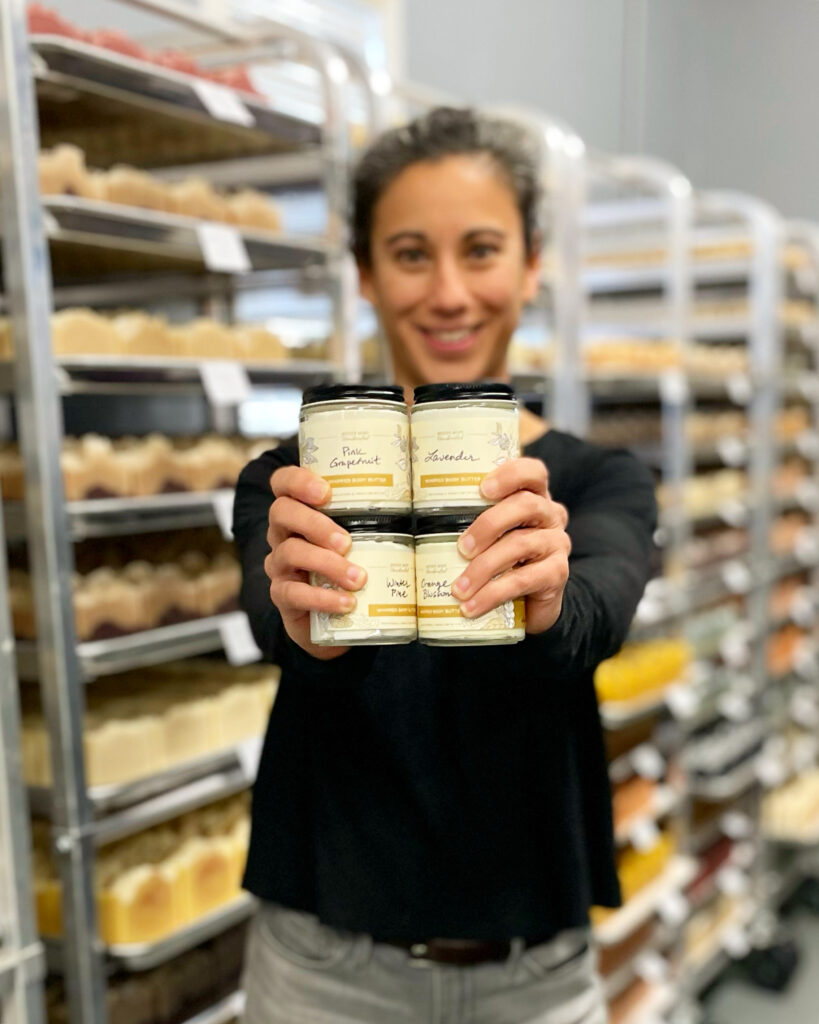
I want people to know that you don’t need many ingredients to make soap. In fact, you only need three: oil, water, and lye! There’s a lot of information out there that suggests you need many ingredients, but soapmaking is a very simple, age-old craft. Over my years of making soap, I had to streamline our ingredients significantly to reach the point where we could purchase in bulk without wasting money. It happened organically, but after many years, I found the ingredients I loved most and that were most versatile. Even at a large scale, we didn’t use a wide variety of ingredients, so I wanted to bring that into focus in this book. I also want soapmaking to be accessible to anyone, regardless of your income or how much time you have. I chose five essential oils that are easy to use but blend beautifully together and don’t cost a ton. I give you three base recipe options with just three to four oils. This base recipe is the only one you use throughout the book. And I use a small, curated list of colorants as well. Every recipe in the book is made with just this short list of ingredients.
If someone could only buy a handful of ingredients to start making soap, which ones would you recommend first and why?
The easiest soap to make that results in a good bar is a blend of olive oil and coconut oil. Add distilled water and sodium hydroxide (lye) and you’re good to go! Olive oil provides nourishment and gentleness to a bar of soap, while the coconut oil gives cleansing and bubbles. It’s a perfect combination! To elevate the bar a little, I’d add some shea butter and castor oil to the recipe and maybe a little goat milk too. Throw in some lavender essential oil, and you’ve got an amazing little bar. Actually, I have a recipe for this exact elevated version in my book!
What is your favorite and least favorite soapmaking task?
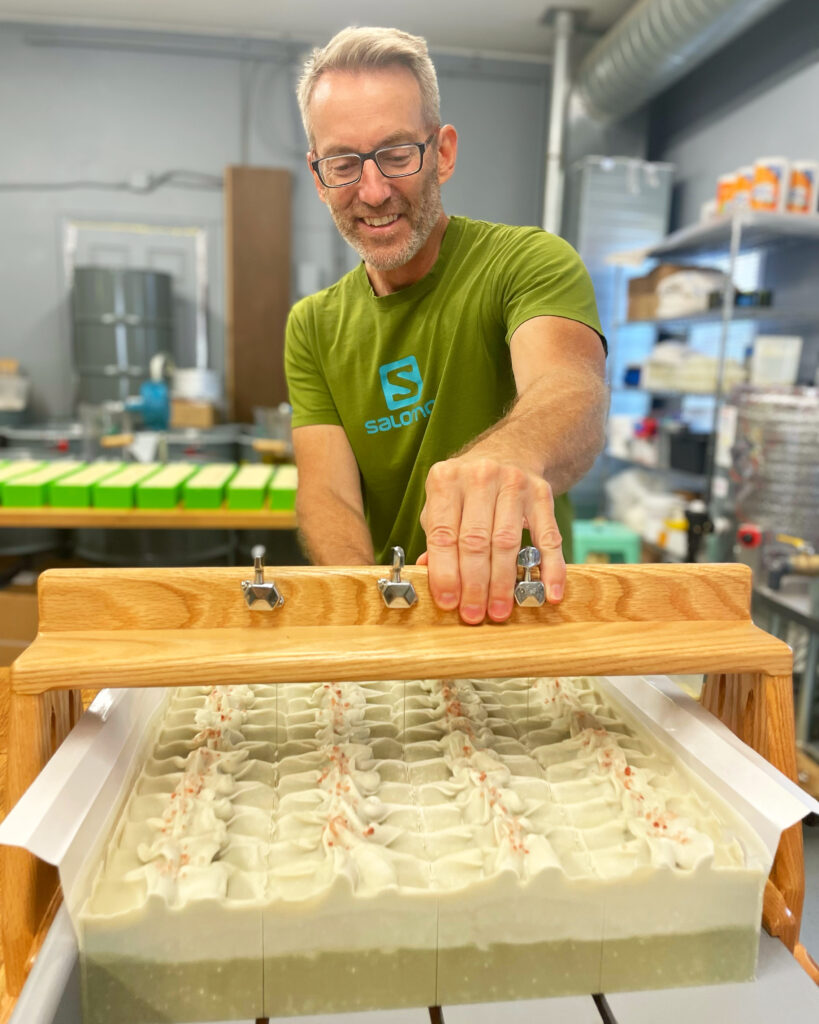
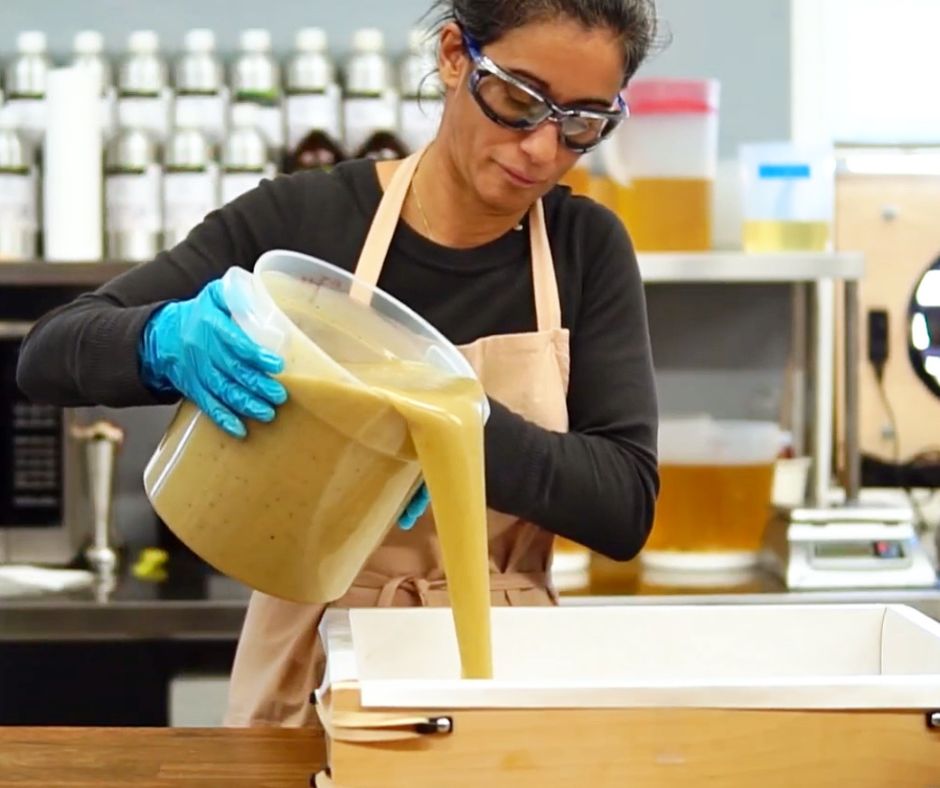
My favorite part is blending up the oils, pouring the soap, and cutting the soap. My least favorite is the prep and clean-up. In fact, when we were running Muddy Mint, my husband Troy did all the prep and clean-up, so it was a dream job! 🙂 However, this is why I love batching my oils and lye-water. It makes the soapmaking days so much easier!
Which recipe in the book is your personal favorite and why?
Ooo… that’s a tough one. I really love the very first recipe (which is also the easiest to make), the Mint + Euc Spa bar. It’s a simple white bar with a beautiful scent and those tend to be my favorite soaps. Another favorite is Sunny Days Ahead Soap, which is a recipe that focuses on lifting you up on a hard day. I combined two colorants to create a really bright and happy soap and the color surprised me! Finally, many soaps in my book are very personal to me, including some inspired by our travels as well as a few dedicated to people that I love, so there are quite a few special recipes.
What’s one mistake you see beginner soap makers make most often?
Good question! I get the most emails about soap that is too soft. Typically, this happens when you don’t use enough lye and this is a common mistake when using a pre-mixed lye-water solution. The second is buying cheap essential oils. I get a lot of emails about soap that has accelerated so fast that a soapmaker couldn’t get it into the mold and I’ve realized that essential oils purchased on Amazon are often the culprit! The last one is just starting out too complicated. The best way to be successful (and I talk about this in the book!) is to start with a simple recipe and build your skills from there. Understanding the feel of the batter is a huge part of soapmaking and if you keep throwing curve balls into your batches with a lot of variety of ingredients, it’s hard to know what’s going wrong when you’re new. Start with an easy and successful project and build your skills from there. That’s what my book teaches you to do.
If you could give one piece of advice to someone making their very first batch of soap, what would it be?
Make a plain unscented batch. Yep – I know – super boring, but the soap will be great! If you really want to add scent, make sure you buy your essential oils from a reputable place like Bulk Apothecary. Start with lavender 40/42 or orange 5x (or mix them 50/50!) for a very easy to use, but pleasant scent.
What’s one lesson you’ve learned after making thousands of soap bars that you wish you had known in the beginning?
Keep it simple!! I wish I could have told myself this at the very beginning. Our business started off far too complicated with tons of different base recipes and scent variations, and we only gained traction when we simplified. It made our lives easier, and our customers preferred it too. Be clear about who you are and what you make, and your customers will respect you for it. They know what you stand for, so there’s never any confusion. This is more of a business-related answer, but it’s the same for new soapmakers. Start simple, go slow, do the prep work, research your stuff (soapmaking is a science after all!) and you will shine.
Where do you find inspiration for new recipes and designs?
Mostly I find inspiration in ingredients, which is why the minimalist soap pantry is so good, but I also find inspiration in nature, people, and locations. I love the idea of using ingredients local to a place to celebrate that area. I also love making a soap that I think someone will really like (you can check out Jackson’s Shower Bar in my book as an example!). My book actually has four different sections all based on my main sources of inspiration, so I love this question!
What do you hope readers take away after finishing Minimalist Soapmaking?
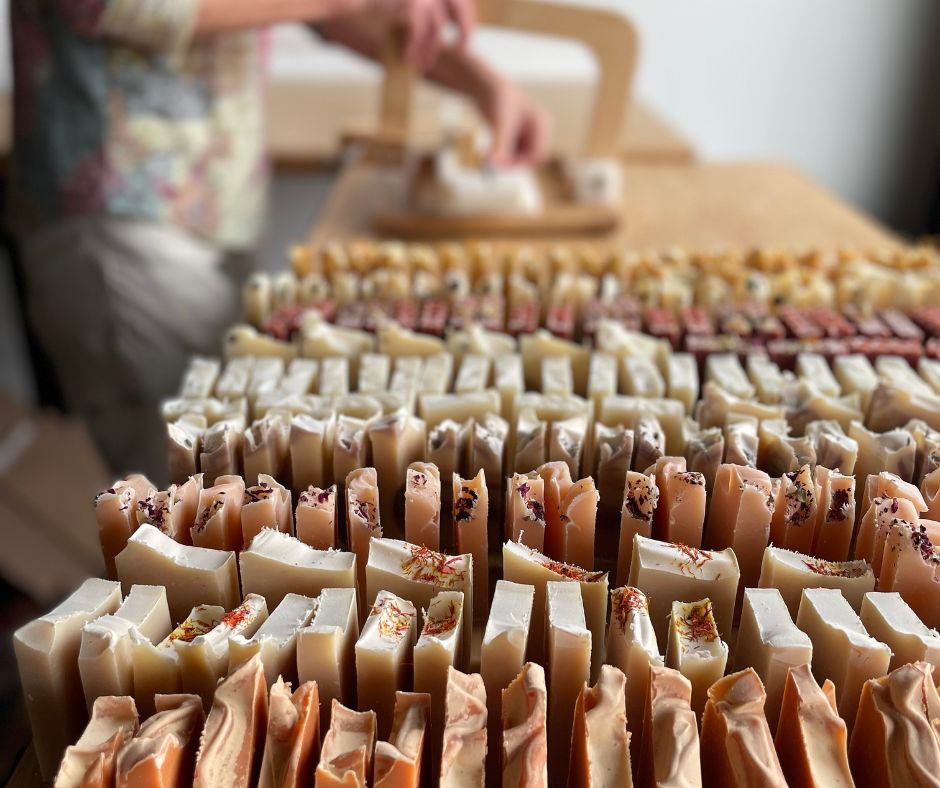
I hope you can make soap if you’ve never made it before, but I hope that it takes the stress out of soapmaking. If you take the time to prepare one day and make soap the next, it will do wonders for you! I timed myself and spent about twenty minutes making a batch of lye-water and preparing four batches of oils. The next day I was able to make a loaf of soap from my book in ten minutes! So, I hope you learn that soapmaking can be simple and low stress if you’re organized and don’t over-complicate it. With my first book, many people emailed me to let me know that preparing their lye-water in advance was a game changer! This idea is considered “advanced” by many soapmakers, but you can do it right from the start! It makes my day when I get an email like that. This book teaches that same concept but takes it even further into other areas of soapmaking, so I hope those become game-changers too!
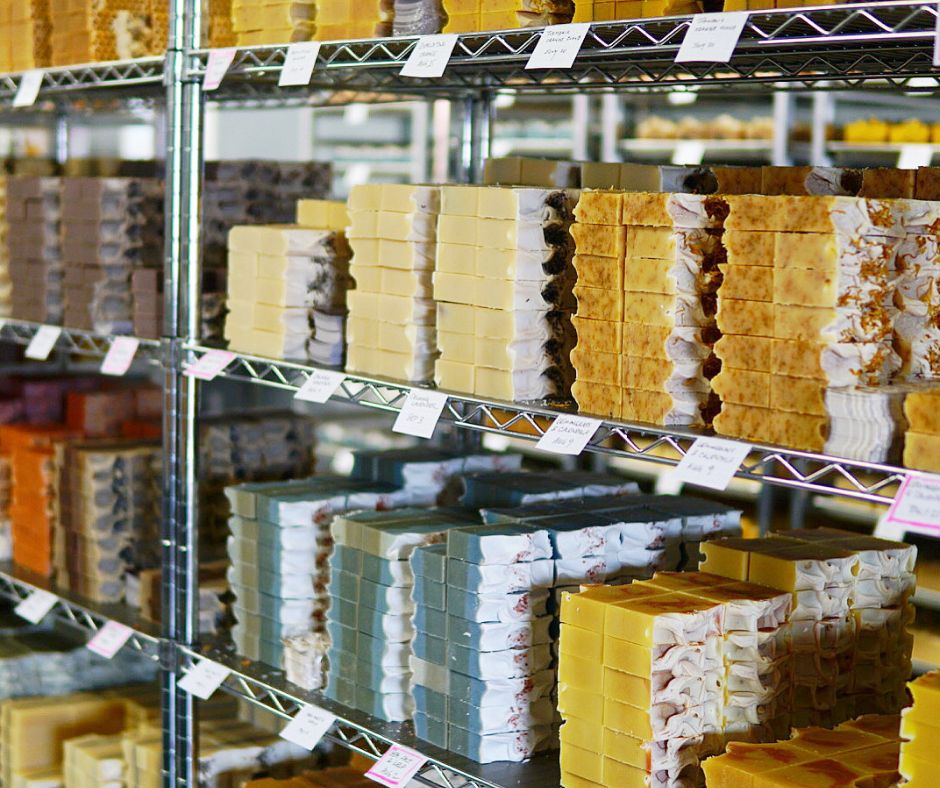
Many of the ingredients featured in your book are available through Bulk Apothecary. If someone is just getting started, what are the top five ingredients you’d recommend they purchase first? (I can share the provided list if that is easier for you)
Over the years, I’ve purchased a lot from Bulk Apothecary, but the top things I purchase for our business is sodium hydroxide (lye), shea butter, coconut oil, lavender 40/42 essential oil and peppermint supreme essential oil. These are items that I often purchased in bulk and Bulk Apothecary has great pricing, especially once you reach that $250 threshold, which gives you 15% off.
Is there anything we didn’t ask that you’d love readers to know about you or the book?
Hopefully you have a good feel for the book after reading this interview, but I’m not sure if I mentioned that every recipe in the book is meant to use the same base of oils. This is what makes this book truly unique. This might sound boring, but it’s really liberating! If you use the same three to four oils (you get to pick the blend of oils you want to use), it makes the soapmaking process so much more predictable, less expensive, and less stressful. As a beginner, using the same oils allows you to get used to how your soap batter behaves and helps you identify more easily what is causing issues in your soapmaking. It also means you use the same amount of lye-water for every recipe! As a more advanced soapmaker, this will allow you to grow far more quickly because it simplifies the process so much. Many large-batch soapmakers work from one base recipe only, so I’m excited to bring this concept from large-batch soapmaking to your small handmade kitchen!
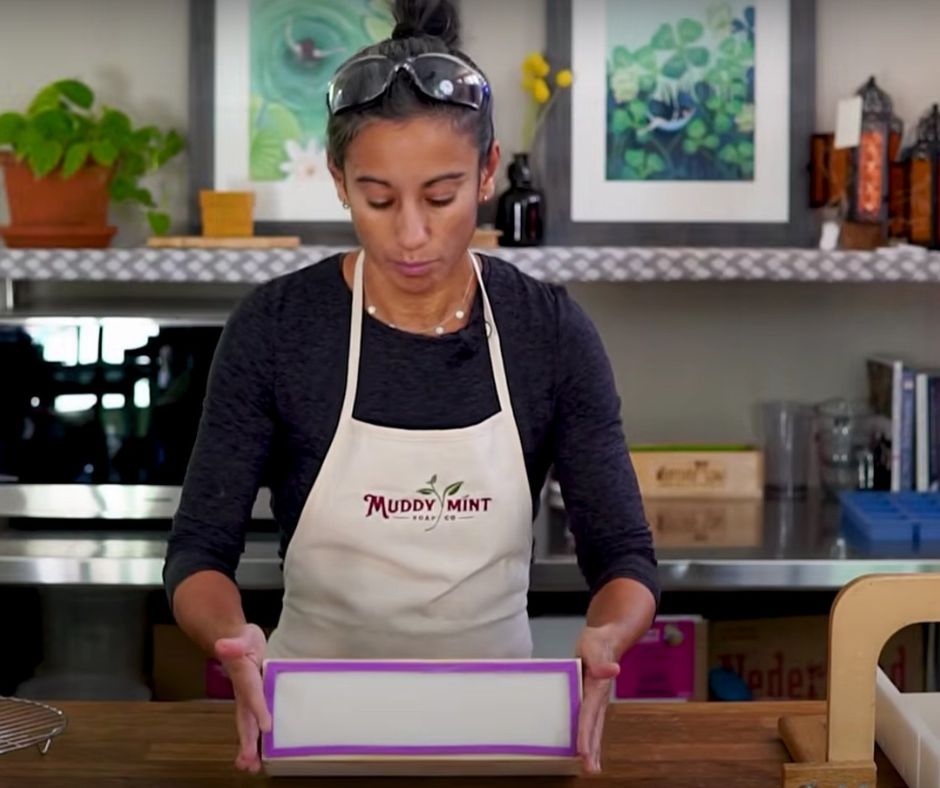
Thank you for taking the time to do this interview and congratulations on your book’s success! Where can our readers connect with you?
I am mostly active on Instagram @muddymint where we have nearly 94k followers, but we also have a YouTube channel @muddymintsoap with about 34k followers that is growing rapidly. My husband, Troy, and I work on the content for the channel together. The YouTube channel has lots of free content about soapmaking and business too. It’s been on a bit of a hiatus while I wrote this book, but we will be back to it soon. We are on Facebook @muddymint and I also run a soapmaking group on Facebook called “The Natural Soapmaking Handbook” which offers support for folks working on recipes from my first book, but it’s expanded to a community of over 16k followers. Finally, our website muddymint.com has links to everything we do and includes some recipe downloads that you can purchase, along with some free downloads as well, like a cost-per-bar calculator and fragrance calculator. We also have an email list as well!
Check out more on the blog: What You Need to Begin Soap Making